

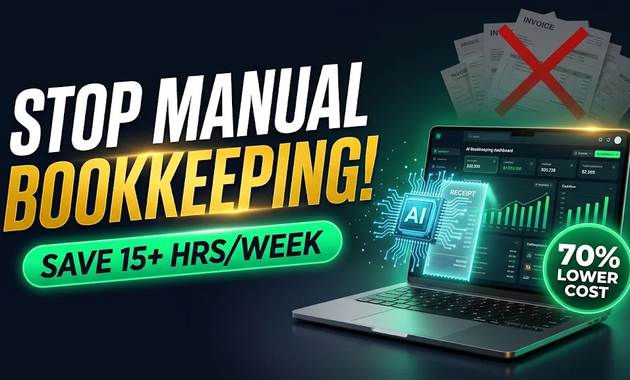
Manual bookkeeping is quietly draining thousands of dollars and dozens of productive hours from small business owners every year. Sorting through crumpled receipts, chasing unpaid client invoices, and reconciling hundreds of bank feed transactions by hand is no longer just tedious—it is an expensive bottleneck. That is why thousands of founders and freelancers are switching to the best AI bookkeeping software to automate their financial back office.
Modern artificial intelligence has completely transformed how small businesses manage cash flow. Instead of waiting until tax season to hand a messy spreadsheet to an expensive accountant, the best AI bookkeeping software categorizes transactions in real time, detects duplicate charges automatically, and flags deductible business expenses the moment a card is swiped.
Whether you run a fast-growing startup, manage a solo consulting practice, or oversee a multi-client accounting firm, choosing the best AI bookkeeping software can cut your monthly accounting workload by more than 70%. In this comprehensive guide, we compare the top-rated best AI bookkeeping software platforms available today, breaking down their real-world pricing, automation accuracy, pros and cons, and ideal business fit.
Why Small Businesses Are Switching to the Best AI Bookkeeping Software
Before comparing individual platforms, it helps to understand what separates the best AI bookkeeping software from legacy cloud spreadsheets. Traditional accounting apps still force you to manually build rigid “if-then” bank rules that break whenever a vendor changes its billing name.
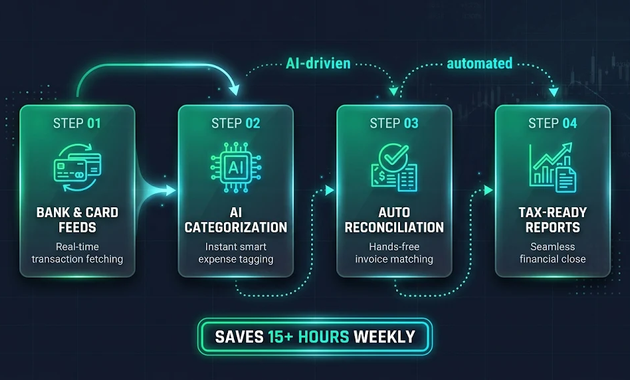
By contrast, modern AI accounting tools for small business rely on machine learning and natural language processing to understand financial context. Here is what changes when you upgrade to the best AI bookkeeping software:
- Continuous Daily Reconciliation: Instead of scrambling at the end of the month, AI agents match bank deposits, credit card swipes, and Stripe payouts every morning.
- Intelligent Expense Categorization: The best AI bookkeeping software learns from your past approvals and automatically assigns new SaaS subscriptions, travel meals, or contractor payouts to the exact right general ledger (GL) code.
- Proactive Anomaly Detection: AI flags unusual vendor price hikes, missing W-9 forms, or duplicate invoice entries before cash leaves your account.
- Instant Natural-Language Answers: Rather than exporting three CSV files to check your runway, you can simply ask your ledger, “How much did we spend on cloud hosting in Q3?” and get an instant, sourced answer.
If you are already streamlining your personal wealth with the best agentic AI personal finance tools, bringing that same autonomous intelligence into your business ledger is the logical next step.
1. QuickBooks Online (with Intuit Assist): Best AI Bookkeeping Software Ecosystem
For established small businesses in the US, UK, Canada, and Australia, QuickBooks Accounting AI remains the undisputed market leader among the best AI bookkeeping software options. Over the past year, Intuit has embedded its generative AI assistant, Intuit Assist, directly into every corner of the QuickBooks Online ledger.
Key Capabilities
- Automated Transaction Cleanup: Accounting AI reviews incoming bank feeds, suggests accurate tax categories, and collaborates with your human bookkeeper to clarify ambiguous charges.
- Bulk Invoice Creation and Follow-Ups: Drafts customized invoices from plain-text notes or email threads and sends polite, automated payment reminders to late clients.
- Quarterly Tax Estimates: Business Tax AI continuously calculates your projected quarterly tax liability based on real-time profit and loss, helping you avoid surprise IRS penalties.
- Massive Third-Party Integration Library: Connects natively with over 750 business apps, including Shopify, Gusto, PayPal, and Square.
Pros and Cons
- Pros: Unmatched CPA and bookkeeper familiarity worldwide, deep payroll and tax integrations, and reliable mobile receipt scanning.
- Cons: Monthly subscription prices have climbed steadily, and advanced multi-user features require upgrading to higher tiers.
- Starting Price: $38/month (Simple Start plan).
- Best For: Established small and mid-sized businesses seeking the best AI bookkeeping software that their existing CPA already knows how to use.
2. Xero (with JAX): Best Global AI Bookkeeping Software for Multi-Currency Teams
If your business operates internationally or deals with multiple currencies, Xero’s Just Ask Xero (JAX) stands out as the best AI bookkeeping software for global teams. Designed for clean usability, Xero pairs intuitive cloud accounting with an AI partner that handles everyday admin directly inside your browser or messaging apps.
Key Capabilities
- Auto-Reconciliation with Confidence Scoring: Xero automatically matches and reconciles bank feed lines where its AI engine detects high-confidence invoice matches, leaving only edge cases for your review.
- Conversational Admin via JAX: Ask JAX to generate a quote, create a new invoice, or check overdue receivables using plain English commands.
- Multi-Currency Automation: Automatically tracks exchange rate fluctuations and calculates realized gains or losses across 160+ currencies.
- Unlimited Users on Standard Plans: Unlike competitors that charge per seat, Xero allows you to invite your entire finance team and external accountant at no extra seat cost.
Pros and Cons
- Pros: Cleanest user interface among legacy cloud ledgers, transparent AI explanations, strong multi-currency support, and lower entry pricing than QuickBooks.
- Cons: Some US-specific payroll and state tax workflows still rely on third-party add-ons like Gusto.
- Starting Price: $25/month.
- Best For: Remote agencies, e-commerce brands, and international small businesses needing the best AI bookkeeping software for multi-currency cash flow.
3. Puzzle: Best AI Bookkeeping Software for Startups and Modern Finance
Unlike legacy platforms that bolted AI onto 20-year-old databases, Puzzle was built from the ground up as an AI-native general ledger. It is widely considered the best AI bookkeeping software for venture-backed startups, SaaS companies, and lean finance teams that need real-time accrual accounting without hiring a full-time controller.
Key Capabilities
- Dual Cash and Accrual Books: Every plan automatically generates both cash-basis books (for tax filing) and GAAP-compliant accrual books (for investors and board decks) simultaneously.
- Real-Time Startup Metrics: Connects directly to Stripe, Mercury, Brex, Ramp, and Gusto to calculate live burn rate, cash runway, and Monthly Recurring Revenue (MRR) automatically.
- Puzzle MCP Integration: Allows founders to connect AI assistants in read-only or controlled read-write mode to query financial statements and cash flow in plain English.
- Optional Expert Bookkeeper Review: You can run your books purely with Puzzle’s AI suite or add a human Puzzle bookkeeper for monthly close reviews.
Pros and Cons
- Pros: Eliminates manual accrual spreadsheets, delivers instant investor-ready financial statements, and offers transparent, startup-friendly pricing.
- Cons: Primarily tailored to US tech startups and modern SaaS stacks rather than brick-and-mortar retail stores with heavy physical inventory.
- Starting Price: $30/month (1 seat); managed bookkeeping services start at $99/month.
- Best For: Tech startups and SaaS founders looking for the best AI bookkeeping software integrated with Stripe, Mercury, and Brex.
4. Digits: Best Visual AI Bookkeeping Software and Reporting Dashboard
If reading traditional rows of black-and-white accounting tables gives you a headache, Digits delivers the best AI bookkeeping software experience for visual financial storytelling. It uses proprietary machine learning models trained on billions of dollars in small business transactions to automate categorization and executive reporting.
Key Capabilities
- Autonomous Ledger Categorization: Digits claims over 90% automated categorization accuracy out of the box, learning vendor patterns immediately after you link your bank accounts.
- Interactive Visual Financial Reports: Instead of static PDFs, you can click into any revenue or expense bar chart to inspect underlying vendor receipts and transaction memos instantly.
- Cash and Accrual Flexibility: Supports both accounting bases seamlessly so your reports scale smoothly as your business grows.
Pros and Cons
- Pros: Gorgeous, executive-friendly reporting dashboards and fast automated transaction sorting.
- Cons: Higher starting monthly price than entry-level tools like Xero or Puzzle, and lacks built-in payroll.
- Starting Price: $65/month per entity.
- Best For: Growth-stage startups and visual founders who want the best AI bookkeeping software for boardroom-ready financial dashboards.
5. Booke AI: Best AI Bookkeeping Software Add-On for QuickBooks and Xero
What if you already love QuickBooks Online or Xero, or your accountant refuses to migrate away from them, yet you still want aggressive AI automation? Booke AI solves this problem by acting as the best AI bookkeeping software add-on that plugs directly into your existing QuickBooks or Xero ledger.
Key Capabilities
- Two-Way Bank Feed Automation: Reviews daily bank feeds inside your existing QuickBooks or Xero file, categorizes uncoded transactions, and matches bills to payments automatically.
- Automated Client Document Requests: If a receipt or invoice is missing for a large charge, Booke AI automatically emails or messages the spender to request the document—saving bookkeepers hours of awkward follow-ups.
- AI Error & Anomaly Detection: Scans your historical ledger for miscategorized expenses, duplicate bills, and unapplied credits before month-end close.
- OCR Receipt Extraction: Reads messy PDF invoices and phone-camera receipts with high accuracy and attaches them directly to the matching ledger entry.
Pros and Cons
- Pros: Zero migration headache since you keep your existing QuickBooks or Xero history; dramatically speeds up month-end close for busy firms.
- Cons: Adds an extra subscription cost on top of your base QuickBooks or Xero license.
- Starting Price: $129/month per business ($116/month when billed annually).
- Best For: Accounting firms, fractional CFOs, and growing businesses already locked into QuickBooks Online or Xero.
6. FreshBooks: Best Automated Bookkeeping for Freelancers and Solopreneurs
For independent consultants, designers, and service-based agencies, enterprise-style general ledgers often feel overly complex. FreshBooks focuses squarely on automated bookkeeping for freelancers, making it the best AI bookkeeping software for solo service providers who want effortless time tracking, client retainers, and smart expense management in one clean dashboard.
Key Capabilities
- Automated Receipt Scanning & Expense Matching: Snap a photo of a lunch or travel receipt, and FreshBooks automatically extracts the merchant, date, tax amount, and category.
- Smart Recurring Invoices & Late Payment Reminders: Set up automated billing schedules with built-in Stripe and credit card checkout links so you get paid up to twice as fast.
- Mileage and Time-to-Invoice Sync: Tracks billable hours and business mileage on mobile, converting unbilled time directly into itemized client invoices in one click.
- Tax-Time Summary Reports: Generates clean Profit & Loss and expense summaries tailored for Schedule C tax preparation.
Pros and Cons
- Pros: Built specifically for solo service providers, super fast onboarding, and top-tier customer support.
- Cons: Not designed for complex inventory tracking or multi-entity corporate accounting.
- Starting Price: Entry plans typically start around $19–$21/month (with frequent introductory discounts).
- Best For: Freelancers, solo consultants, photographers, and small creative agencies searching for the best AI bookkeeping software for client billing.
7. Kick & Zeni: Best Hands-Off AI Bookkeeping Software for Solo and Funded Teams
As you evaluate the best AI bookkeeping software, you will notice two emerging extremes: ultra-lean tools for solo creators and full-service hybrid platforms for funded companies. Two standout specialists in 2027 are Kick (ideal for solo entrepreneurs) and Zeni (built for scaling startups).
Kick (Best Free Tier & Solo Tax Prep)
- Real Free Tier: Offers a genuine free plan supporting up to 250 transactions per year—making it the best AI bookkeeping software entry point for brand-new side hustles and micro-freelancers.
- Self-Cleaning AI: Automatically separates personal and business expenses on shared cards and prepares clean tax-ready categories.
Zeni (Best AI + Human Finance Team)
- Daily Bookkeeping with Human Oversight: Combines AI automation with dedicated human bookkeepers and CPAs inside QuickBooks Online Plus.
- Full Startup Finance Stack: Handles bill pay, reimbursements, automated accruals, and corporate tax filings under one managed roof.
- Starting Price: Kick starts at $0/month (Basic paid plans from $40/month billed annually); Zeni managed plans start around $494/month billed annually.
Comparison Table: Best AI Bookkeeping Software at a Glance
Use this side-by-side breakdown to compare the best AI bookkeeping software by starting price, free tier availability, and standout automation capabilities:
| Software | Core Category | Starting Price | Free Tier? | Standout AI Feature |
| QuickBooks Online | Full SMB Suite | $38/mo | Trial only | Intuit Assist cleanup & bulk invoicing |
| Xero | Global Cloud Ledger | $25/mo | Trial only | JAX (Just Ask Xero) & auto-reconcile |
| Puzzle | Startup AI Ledger | $30/mo | Free trial | Real-time cash + accrual & Puzzle MCP |
| Digits | Visual AI Accounting | $65/mo | No | 90%+ auto-categorization & live charts |
| Booke AI | QBO/Xero Add-On | $129/mo | Trial only | Missing-document chasing & error scan |
| FreshBooks | Freelancer Suite | ~$19/mo | Trial only | Receipt OCR & automated client billing |
| Kick | Solo / Micro-Business | $0/mo | Yes (250 tx/yr) | Automated personal/business expense split |
QuickBooks Intuit Assist vs Xero JAX: Which Native AI Wins?
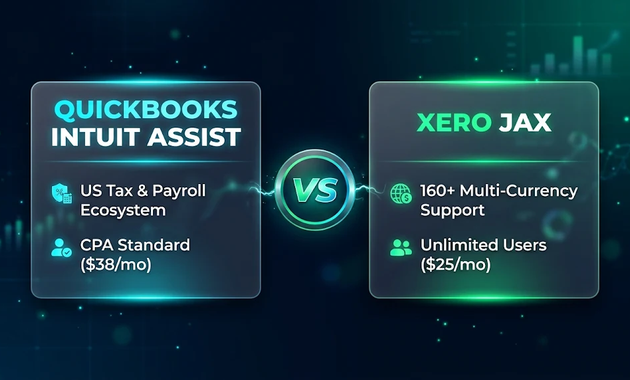
Because QuickBooks and Xero control the vast majority of the small business market, comparing QuickBooks Intuit Assist vs Xero JAX is one of the most common decisions founders face when picking the best AI bookkeeping software.
- Choose QuickBooks Intuit Assist if: You operate primarily in the United States, need tight integration with US payroll and TurboTax workflows, or work with a traditional local CPA who exclusively uses QuickBooks Accountant.
- Choose Xero JAX if: You run an international or remote team, deal with multiple currencies, want unlimited user seats without paying per login, or prefer a cleaner, less cluttered interface at a lower monthly entry price.
According to independent software evaluations from PCMag’s small business accounting picks, both platforms deliver reliable core ledgers, so your final choice of the best AI bookkeeping software should come down to your region, currency needs, and your accountant’s preference.
How AI Tax Preparation Software Integrates with Your Ledger
One of the biggest hidden payoffs of adopting the best AI bookkeeping software is what happens when tax season arrives. Modern AI tax preparation software relies on clean, structured ledger data to maximize legal deductions and minimize audit risk.
When your best AI bookkeeping software categorizes expenses accurately all year long:
- Zero Tax-Season Scramble: You avoid paying emergency hourly rates to a CPA in March or April to untangle 12 months of uncoded bank statements.
- Maximum Deduction Capture: AI tools automatically flag home-office expenses, software subscriptions, business mileage, and equipment depreciation that busy founders routinely forget to claim.
- Instant Audit Trail: Every transaction is permanently linked to a digital receipt image inside your cloud ledger, protecting you if tax authorities ever request verification.
How to Choose the Best AI Bookkeeping Software for Your Business
With dozens of fintech apps claiming to be “AI-powered,” use this four-step checklist before committing your company’s financial data to the best AI bookkeeping software:
1. Check Bank Feed and Payment Processor Compatibility
Make sure the best AI bookkeeping software you pick connects natively to your exact business checking account, corporate credit cards (such as Mercury, Brex, Chase, or Amex), and payment gateways (Stripe, PayPal, Shopify). Broken bank feeds are the number-one cause of bookkeeping headaches.
2. Decide Between Cash Basis and Accrual Accounting
Freelancers and service businesses under $1M in revenue usually operate on simple cash-basis accounting. However, if you raise venture capital, manage physical inventory, or sell annual SaaS contracts, you need accrual-basis support—making tools like Puzzle, Xero, or QuickBooks the best AI bookkeeping software choices for your stage.
3. Verify Data Security and Encryption Standards
Your financial ledger holds sensitive bank credentials and tax IDs. Only choose the best AI bookkeeping software vendors that enforce bank-grade 256-bit AES encryption, two-factor authentication (2FA), and SOC 2 Type II compliance. Never upload sensitive financial records to unverified consumer chatbots; if you want offline document analysis, explore the best local AI tools or pair your workflow with the best AI productivity tools.
4. Factor in Total Cost Including Add-Ons
Always calculate the true monthly price. A $25 base subscription can quickly climb to $100+ once you add payroll seats, multi-currency billing, or external AI add-on plugins.
Step-by-Step: How to Switch to AI Bookkeeping in One Afternoon
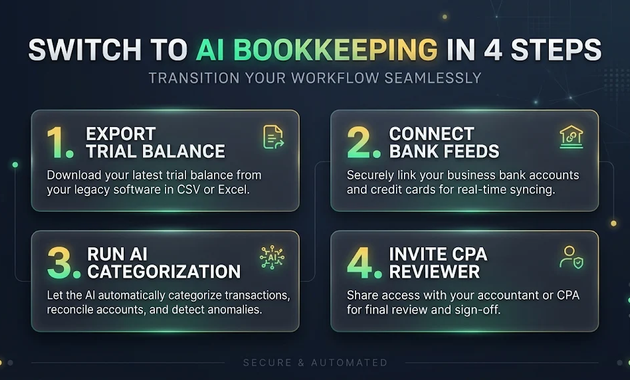
Migrating your books to the best AI bookkeeping software sounds intimidating, but modern onboarding tools make it painless:
- Export Your Trial Balance and Chart of Accounts: Download your current year-to-date summary from your old spreadsheet or legacy software.
- Connect Your Primary Bank and Credit Card Feeds: Link your business accounts securely via Plaid or direct bank OAuth—never share raw banking passwords.
- Run an Initial AI Categorization Pass: Let the best AI bookkeeping software scan the past 90 days of transactions and review its top 20 suggested rules.
- Invite Your Accountant as a Reviewer: Give your CPA read-only or advisor access to verify your opening balances so your tax filings stay 100% aligned.
Frequently Asked Questions (FAQ)
What is the best AI bookkeeping software for small businesses in 2027?
QuickBooks Online (with Intuit Assist) and Xero (with JAX) are the best AI bookkeeping software choices for most established small businesses. For tech startups needing automated accrual accounting, Puzzle is a top AI-native choice, while FreshBooks excels for solo freelancers.
Is there free AI bookkeeping software available?
Yes. Kick offers a genuine free tier for micro-businesses processing up to 250 transactions per year. Additionally, Wave provides free core invoicing and basic expense tracking, while most of the best AI bookkeeping software platforms offer 14-to-30-day free trials.
Can AI bookkeeping software completely replace a human accountant?
No. While the best AI bookkeeping software automates 80% to 90% of daily data entry, receipt matching, and bank reconciliation, you still need a qualified CPA or tax advisor for complex tax strategy, legal entity structuring, and final annual tax filing sign-offs.
How accurate is AI transaction categorization?
The best AI bookkeeping software platforms achieve roughly 85% to 95% accuracy after learning your business for 30 to 60 days. Most platforms also display confidence scores and route uncertain transactions to a “Needs Review” queue so nothing is miscategorized silently.
Is it safe to connect my business bank account to AI accounting tools?
Yes, provided you use reputable, SOC 2 compliant platforms like QuickBooks, Xero, Puzzle, or FreshBooks. These platforms connect through regulated read-only banking aggregators (such as Plaid or direct bank OAuth tokens) that cannot move funds out of your account.
How much money can AI bookkeeping save a small business?
Traditional human bookkeeping services often cost $300 to $1,000+ per month depending on transaction volume. Switching to the best AI bookkeeping software starting at $25 to $65 per month—while keeping a CPA only for quarterly reviews—can reduce annual accounting overhead by 60% to 75%.
Conclusion
Investing in the best AI bookkeeping software is one of the highest-ROI upgrades any small business owner, startup founder, or freelancer can make. By eliminating manual receipt entry, automating daily bank reconciliations, and keeping your books tax-ready year-round, you reclaim dozens of hours every month to focus on growing revenue.
If you want a proven global standard, start with Xero or QuickBooks Online. If you are building a modern tech startup, test Puzzle or Digits. And if you are a solo freelancer looking for the best AI bookkeeping software to simplify invoicing and expenses today, give FreshBooks or Kick a try.